

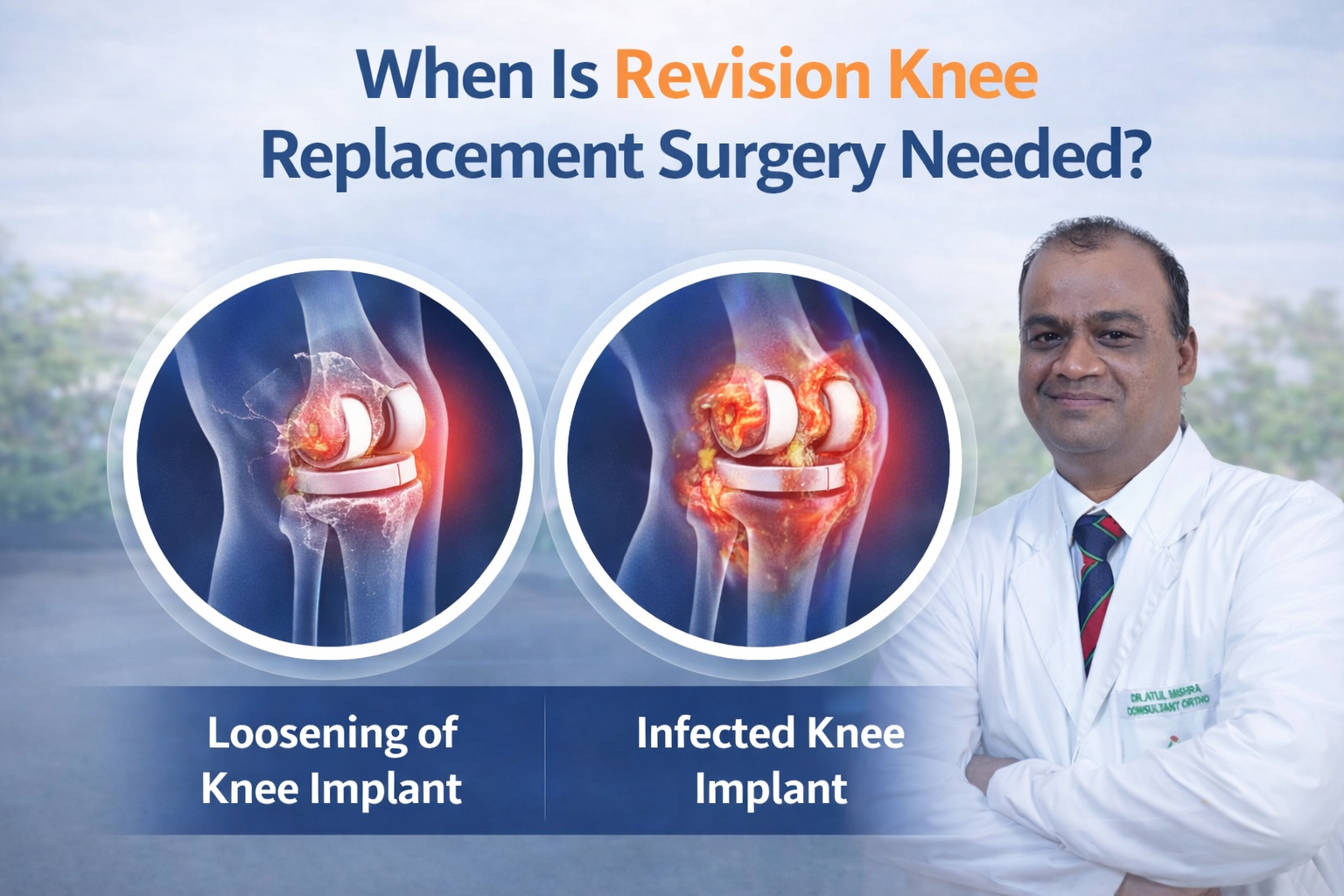
Knee replacement surgery is done to reduce pain and improve movement when the knee joint is badly damaged. In most cases, it works very well for many years. But sometimes the first implant does not keep working as expected, or a new problem develops later. In such cases, Revision Knee Replacement Surgery may be needed. This is a second operation in which part or all of the old knee implant is removed and replaced with a new one. Revision surgery is usually more complex than the first knee replacement because the surgeon may need to manage bone loss, scar tissue, instability, or infection.
A Revision Knee Replacement Surgeon usually advises this surgery only after a proper clinical examination, imaging, and tests confirm that the original knee replacement is failing or causing serious problems. Not every painful knee replacement needs revision. Some patients may have pain due to muscle weakness, inflammation, or causes not related to implant failure. That is why careful diagnosis is very important before planning a revision knee replacement.
What Is Revision Knee Replacement Surgery?
Revision Knee Replacement Surgery is a procedure done when a previous knee replacement no longer works properly. During this operation, the old implant may be removed fully or partially, and a new implant is inserted. In some cases, the new implant is larger or more specialized because the knee may have less bone support or weaker ligaments than before. This makes the surgery more demanding than a first-time knee replacement.
When Is Revision Knee Replacement Surgery Needed?
There are several situations where Revision Knee Replacement Surgery may be needed.
1. Implant Loosening
One of the most common reasons for Revision Knee Replacement is loosening of the implant. Over time, the bond between the implant and bone can weaken. When this happens, the implant may move slightly, causing pain, swelling, or a feeling that the knee is not stable. Some patients notice pain, especially when they start walking after sitting for some time.
2. Infection in the Knee Joint
Infection is a serious reason for Revision Knee Replacement Surgery. It can happen soon after surgery or even years later. Signs may include pain, swelling, warmth, drainage from the wound, fever, or reduced function. A deep infection around the implant may require further surgery, and in many cases, revision is needed to remove the infected implant and treat the infection properly.
3. Instability of the Knee
Sometimes the knee replacement becomes unstable. This means the knee may feel loose, give way, or not support the body properly during walking or climbing stairs. Instability can happen if the surrounding ligaments are weak, the implant is not positioned ideally, or the joint wears over time. In such cases, a Revision Knee Replacement Surgeon may recommend surgery to restore balance and support.
4. Wear of the Implant Parts
Artificial knee implants are designed to last many years, but they can wear down over time. When the plastic spacer or other parts wear out, the knee may become painful, swollen, or unstable. Wear can also lead to damage in the surrounding bone. If the wear is significant, Revision Knee Replacement Surgery may be needed.
5. Stiffness and Poor Knee Function
Some patients develop severe stiffness after knee replacement. If the knee does not bend or straighten properly, daily activities become difficult. Mild stiffness may improve with exercise and treatment, but severe and long-lasting stiffness may need further evaluation. In selected cases, Revision Knee Replacement may be considered if the stiffness is due to implant position, scar tissue, or other mechanical problems.
6. Fracture Around the Implant
A fracture in the bone around the knee implant can also make revision necessary. This may happen after a fall or due to weakness in the bone. If the fracture affects the implant’s stability or the bone support around it, a Revision Knee Replacement Surgeon may need to replace the implant and fix the fracture.
7. Wrong Alignment or Position of the Implant
If the original knee implant is not aligned properly, it can lead to pain, instability, poor movement, and uneven wear. In such situations, a surgeon may recommend Revision Knee Replacement Surgery to correct the problem and improve knee function.
Symptoms That Should Not Be Ignored
A patient may need evaluation for Revision Knee Replacement if there is persistent knee pain, repeated swelling, difficulty walking, instability, reduced range of motion, fever, or a sudden drop in knee function. Pain that gets worse after initially doing well should not be ignored. These symptoms do not always mean revision is necessary, but they should be checked by an experienced Revision Knee Replacement Surgeon.
How Doctors Decide If Revision Is Needed
Before recommending Revision Knee Replacement Surgery, doctors usually review the patient’s history, examine the knee, and order tests such as X-rays, blood tests, and sometimes joint fluid testing. These tests help identify loosening, infection, fracture, wear, or alignment issues. A proper diagnosis is important because the treatment depends on the exact cause of failure.
Is Revision Knee Replacement More Difficult?
Yes, Revision Knee Replacement Surgery is usually more complex than the first surgery. The surgeon may need to remove old implants carefully, deal with damaged bone, and use special revision implants. Recovery can also be slower in some patients. That is why choosing an experienced Revision Knee Replacement Surgeon is very important.
Final Thoughts
Revision Knee Replacement Surgery is needed when a previous knee replacement fails due to loosening, infection, wear, instability, stiffness, fracture, or implant malposition. The goal is to reduce pain, improve stability, and help the patient return to daily life with better knee function. However, revision should only be planned after a proper diagnosis. If a patient has ongoing pain, swelling, or difficulty using the knee after a previous replacement, it is best to consult a qualified Revision Knee Replacement Surgeon without delay. Early assessment can help prevent the problem from getting worse and improve the chances of a successful Revision Knee Replacement.
FAQ’s
It is a second surgery done to replace part or all of a previous knee implant that has failed or is causing problems.
It may be needed in cases of implant loosening, infection, instability, wear, stiffness, fracture around the implant, or wrong alignment.
No. Pain can happen for many reasons. A full evaluation is needed before deciding on Revision Knee Replacement Surgery.
Yes. It is usually more complex because the surgeon may need to manage bone loss, scar tissue, or infection and use special implants.
A skilled and experienced Revision Knee Replacement Surgeon should perform it because revision cases often need advanced planning and surgical expertise.
Persistent pain, swelling, instability, fever, stiffness, drainage from the wound, or worsening knee function should be checked by a specialist.