

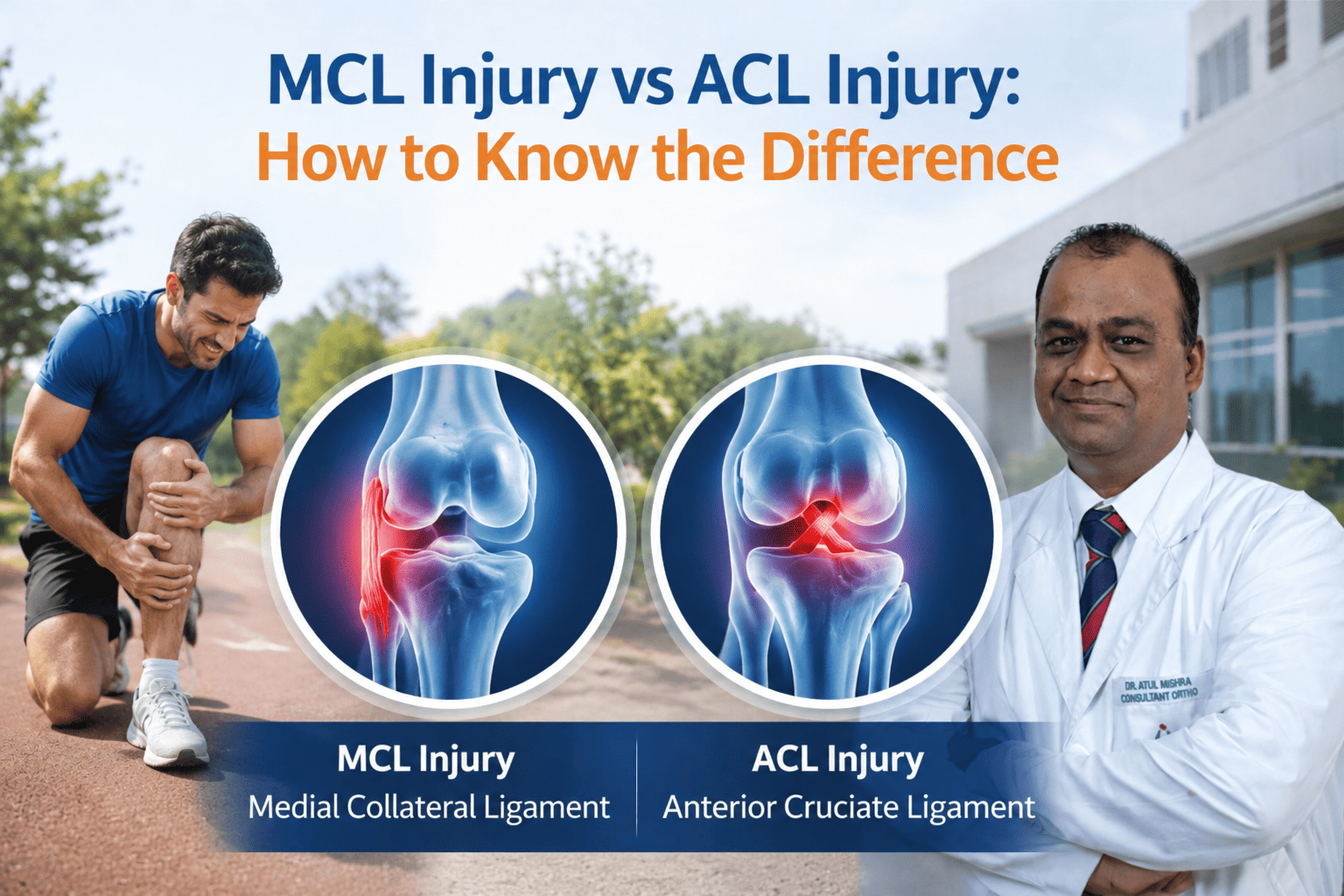
Knee injuries are common among athletes, fitness enthusiasts, and even people who twist their knee during daily activities. Two of the most commonly injured knee ligaments are the MCL and ACL. Since both injuries can cause pain, swelling, and difficulty walking, many patients get confused about whether they have an MCL injury or an ACL injury.
The truth is, both injuries affect knee stability, but they are not the same. The location of pain, the way the injury happens, the swelling pattern, and the feeling of instability can help indicate the difference.
This blog explains MCL injury vs ACL injury in simple language, so you can understand the warning signs and know when to consult an orthopaedic specialist.
What Is an MCL Injury?
The MCL, or medial collateral ligament, is present on the inner side of the knee. It helps prevent the knee from bending too far inward.
An MCL injury usually happens when there is a direct force on the outer side of the knee. This force pushes the knee inward and stretches or tears the ligament on the inner side.
MCL injuries are common in sports like football, basketball, wrestling, skiing, and other activities where the knee can suddenly twist or get hit from the side.
What Is an ACL Injury?
The ACL, or anterior cruciate ligament, is located inside the knee joint. It helps control forward movement of the shin bone and provides rotational stability to the knee.
An ACL injury often happens during sudden stops, sharp turns, awkward landings, or quick changes in direction. Unlike MCL injuries, ACL injuries do not always require direct contact. Many ACL tears occur during non contact movements, especially in sports.
ACL injuries are commonly seen in football, basketball, badminton, running, skiing, and high intensity training.
MCL Injury vs ACL Injury: The Main Difference
The biggest difference between an MCL injury and an ACL injury is the location and type of instability.
In an MCL injury, the pain is usually on the inner side of the knee. The knee may feel tender, sore, or unstable when pressure is applied from the side.
In an ACL injury, the pain is often deeper inside the knee. Many patients feel or hear a pop at the time of injury. Swelling usually develops quickly, and the knee may feel like it will give way while walking, turning, or climbing stairs.
Common Symptoms of an MCL Injury
An MCL injury may cause:
- Pain on the inner side of the knee
- Swelling near the injured ligament
- Tenderness when touching the inside of the knee
- Difficulty bending or straightening the knee
- A feeling that the knee may buckle sideways
- Pain while walking, especially during side movements
MCL injuries can be mild, moderate, or severe. A mild sprain may improve with rest and rehabilitation, while a complete tear may require detailed evaluation.
Common Symptoms of an ACL Injury
An ACL injury may cause:
- A popping sound or popping sensation during injury
- Sudden pain in the knee
- Rapid swelling within a few hours
- Difficulty standing or walking
- Loss of knee movement
- A feeling that the knee is unstable
- Trouble changing direction or pivoting
ACL injuries should not be ignored, especially if the knee repeatedly gives way. Untreated instability can increase the risk of further damage to the meniscus or cartilage.
How the Injury Usually Happens
The way the injury happens can give an important clue.
An MCL injury commonly happens due to a direct blow to the outer side of the knee. For example, during a football tackle, if the knee is forced inward, the MCL can get stretched or torn.
An ACL injury often happens when the foot is planted and the body suddenly twists. It can also occur while landing badly after a jump or stopping suddenly while running.
So, if the pain started after side impact, MCL injury may be more likely. If the injury happened during twisting, pivoting, or landing, ACL injury may be suspected.
Pain Location: A Simple Clue
Pain location is one of the easiest ways to understand the difference.
If the pain is mainly on the inner side of the knee, it may point toward an MCL injury.
If the pain is deep inside the knee with swelling and instability, it may point toward an ACL injury.
However, symptoms can overlap. Some patients may injure both the MCL and ACL together, especially after a high impact sports injury or accident. That is why proper diagnosis is important.
Which Injury Is More Serious?
Both injuries need attention, but ACL injuries are often considered more serious because they affect the internal stability of the knee. A complete ACL tear may not heal on its own and may require surgery in active patients, athletes, or people with repeated knee instability.
MCL injuries often heal without surgery, especially Grade 1 and Grade 2 injuries. However, severe MCL tears or combined ligament injuries may need advanced treatment.
The seriousness depends on the grade of injury, patient age, activity level, occupation, sports involvement, and whether other knee structures are damaged.
How Are MCL and ACL Injuries Diagnosed?
An orthopaedic doctor usually begins with a physical examination. The doctor checks swelling, pain location, knee movement, tenderness, and stability.
Some clinical tests are used to assess ligament damage. Imaging may also be advised.
Diagnosis may include:
- Physical examination
- X ray to rule out fracture
- MRI to check ligament, cartilage, and meniscus damage
- Functional assessment of knee stability
MRI is especially helpful when symptoms suggest ACL tear, meniscus injury, or multiple ligament involvement.
Treatment for MCL Injury
Most MCL injuries are treated without surgery. Treatment may include:
- Rest and activity modification
- Ice application in the early phase
- Knee brace for support
- Pain relief medicines as advised
- Physiotherapy and strengthening exercises
- Gradual return to sports or activity
The recovery timeline depends on the severity of the tear. Mild injuries may recover faster, while severe injuries need longer rehabilitation.
Treatment for ACL Injury
ACL treatment depends on the severity of the tear and the patient’s lifestyle. Some partial injuries may be managed with physiotherapy, but complete ACL tears often require surgical reconstruction in active individuals.
Treatment may include:
- Initial swelling and pain control
- Physiotherapy to restore movement and strength
- Knee bracing in selected cases
- ACL reconstruction surgery if required
- Structured rehabilitation after surgery
ACL recovery needs patience. Returning to sports too early can increase the risk of reinjury.
When Should You See a doctor?
You should consult an orthopaedic specialist if:
- Your knee swelling develops quickly
- You heard a pop during injury
- Your knee feels unstable
- You cannot walk properly
- Pain continues after rest
- Your knee locks or gets stuck
- You injured your knee during sports or an accident
Early diagnosis can prevent the injury from becoming worse and can reduce the risk of long-term knee problems.
Why Choose ASIC Clinic for Knee Ligament Injuries?
At ASIC Clinic, knee ligament injuries are evaluated with a detailed orthopaedic approach. Whether the concern is an MCL injury, ACL injury, meniscus tear, or sports related knee trauma, the focus is on accurate diagnosis and the right treatment plan.
The goal is not just pain relief. The goal is to restore knee stability, movement, strength, and confidence so patients can return to daily activities and sports safely.
Final Thoughts
MCL and ACL injuries may sound similar, but they affect different parts of the knee. MCL pain is usually felt on the inner side of the knee, while ACL injuries often cause deep knee pain, rapid swelling, a popping sensation, and instability.
If you have knee pain after a twist, fall, sports injury, or sudden impact, do not ignore it. Getting the right diagnosis at the right time can make a major difference in recovery.
FAQs
Yes, many MCL injuries heal without surgery, especially mild and moderate tears. Bracing, rest, and physiotherapy are commonly used.
A complete ACL tear usually does not heal properly on its own. Some patients may manage with physiotherapy, but active individuals often need ACL reconstruction.
Inner knee pain often suggests MCL injury, while a popping sound, fast swelling, and knee instability may suggest ACL injury. A doctor can confirm it with examination and MRI.
Yes, both ligaments can be injured together, especially in high impact sports injuries or accidents.
MRI is often recommended when the doctor suspects ligament tear, meniscus injury, cartilage damage, or multiple knee injuries.